Search used to mean one thing: type a query into Google, click a result. That model is breaking apart. Artificial intelligence (AI) platforms like ChatGPT, Gemini, Claude, and Perplexity now sit between brands and buyers at nearly every stage of discovery, and the shift looks different in every industry.
Some categories feel it in how shoppers browse. Others feel it in how buyers build a vendor list, or how patients research a symptom before calling a doctor. Here is how it is playing out across fashion ecommerce, SaaS, local business, healthcare, and hospitality, and what it means for anyone trying to stay visible.
AI Search Behavior Is Changing Every Buyer Journey
The starting point for research has moved. Software buyers now often open a chatbot before a search engine. Generative engine optimization (GEO), the practice of earning visibility inside AI-generated answers, has become a parallel discipline to traditional SEO rather than a subset of it.
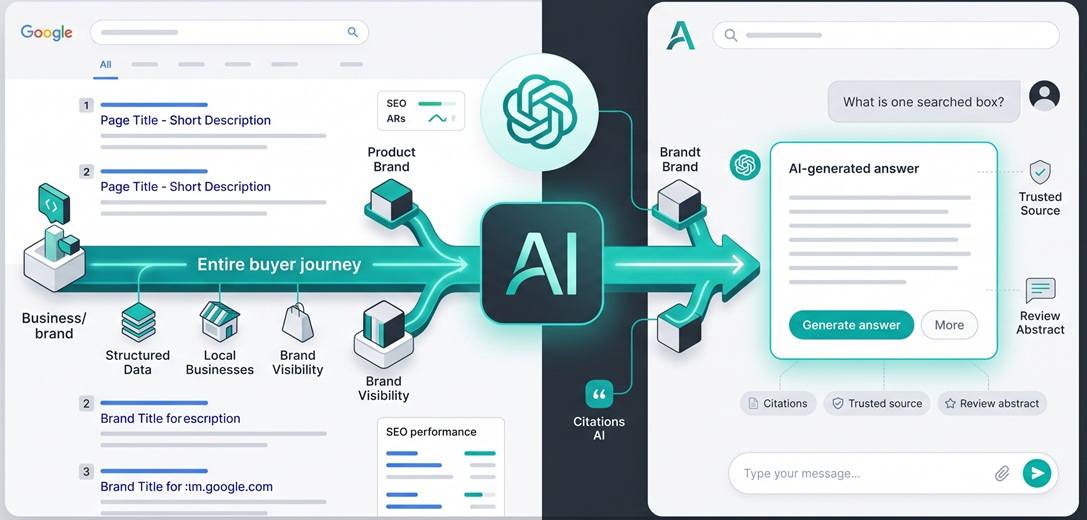
The pattern holds across categories: 51% of B2B software buyers now start their research in an AI chatbot more often than Google, up from 29% a year earlier. That is not a niche behavior. It is becoming the default. Brands that only optimize for classic search results are already missing half the funnel in some categories, and the gap is widening industry by industry.
What makes this shift different from past search changes is that AI does not rank a brand lower when it falls short. It leaves the brand out of the answer entirely. There is no page two in a chat response. That single fact is reshaping how every industry below has to think about visibility.
The content implication is straightforward, even if the execution is not. Answers get built from sources the AI already trusts: third-party reviews, structured data, trade publications, and clearly attributed expertise. A brand’s own homepage copy rarely carries that weight on its own anymore.
Fashion Ecommerce: AI Becomes the New Storefront
Fashion shopping has always leaned on visual browsing, which made it slower to shift toward AI-driven discovery. That changed fast. Shopping-related searches on generative AI platforms grew 4,700% between 2024 and 2025, and shoppers who use AI to research clothing increasingly use it to buy as well.
For fashion and ecommerce brands, this means product data has to be readable by AI shopping assistants, not just indexable by Google. Structured data, clean product feeds, and detailed specifications now double as GEO infrastructure.
|
Visible to Google
Ranks well, still invisible to AI agents
✗ Static category pages
✗ Unstructured product listings ✗ Human-readable, not machine-readable ✗ One-size-fits-all catalog view |
Visible to AI agents
Findable when an agent searches on the shopper’s behalf
✓ Structured data on every product
✓ Clean, frequently updated feeds ✓ Detailed specifications (size, price, material) ✓ Machine-readable catalog infrastructure |
A retailer whose catalog is not machine readable is invisible to an AI agent asked to find a waterproof jacket under $150, regardless of how well that retailer ranks on Google.
Personalization compounds the effect. AI tools increasingly build a unique storefront view for each shopper based on browsing history and stated preferences, which means static category pages carry less weight than a well-structured, frequently updated catalog. Fashion brands that treat fashion marketing and ecommerce SEO as one connected system, rather than two separate channels, are the ones best positioned to win here.
SaaS Marketing: Vendor Shortlists Are Built Before Sales Ever Gets a Call
B2B software buying has compressed dramatically. Buyers increasingly build their shortlist inside a chatbot, comparing vendors, reading reviews, and drafting evaluation criteria, before a sales team knows they exist. AI chatbots are now the single biggest influence on which vendors make that shortlist, ahead of review sites and vendor websites themselves.
The practical consequence is that a SaaS company’s own website is only one input among many the AI weighs. Third-party reviews, comparison content, and independent mentions across the web carry more weight than owned marketing copy. Case studies, analyst mentions, and community discussion threads now function as top-of-funnel assets in a way they never did when Google rankings were the only battleground.

For SaaS marketers, this means investing in review platform presence and earned mentions is no longer a nice-to-have. It is now a primary lever for AI visibility, and it needs its own budget line rather than living as an afterthought inside a broader content plan. Marketing teams that used to measure success purely by demo requests now need to track share of voice inside AI-generated comparisons too, since that is where a growing share of the real evaluation now happens.
Local SEO: The Business Case Has Never Been Stronger
Local search remains one of the most reliable revenue drivers available to a business with a physical location. AI has not displaced that; it has layered on top of it. Google’s local map pack, Apple Maps, and now AI assistants are all sources local businesses have to manage simultaneously, each with its own data requirements and quirks.
|
Google
Local map pack ranking, near half of all searches carry local intent
|
Shared signal
Complete, accurate, reviewed Google Business Profile
|
AI Platforms
Draws on the same trust and accuracy signals when recommending a business
|
Two facts anchor the business case. Nearly half of all Google searches carry local intent, and the large majority of those searches convert into a store visit within a day. A business that keeps its Google Business Profile complete, accurate, and reviewed consistently is positioned to win across search engines and AI platforms alike, since both draw on the same underlying signals of accuracy and trust.
Category selection, review response rate, and consistent business information across every directory now function as ranking factors for two systems at once, not one, making a clean, complete profile one of the few local investments that pays off in both places at the same time.
Healthcare Marketing: Patients Are Asking AI Before They Ask a Doctor
Patients are increasingly consulting AI chatbots before they call a provider. They ask about symptoms, medications, and treatment options, often taking a concrete next step afterward, whether that is scheduling an appointment or searching for more information elsewhere.
This creates a distinct challenge for healthcare marketers. Accuracy and recency matter more here than almost anywhere else, since AI models cross-reference a provider’s own website against insurance directories and state licensing boards. A provider who stops accepting new patients or changes availability needs that update reflected everywhere at once, not just on its own site.
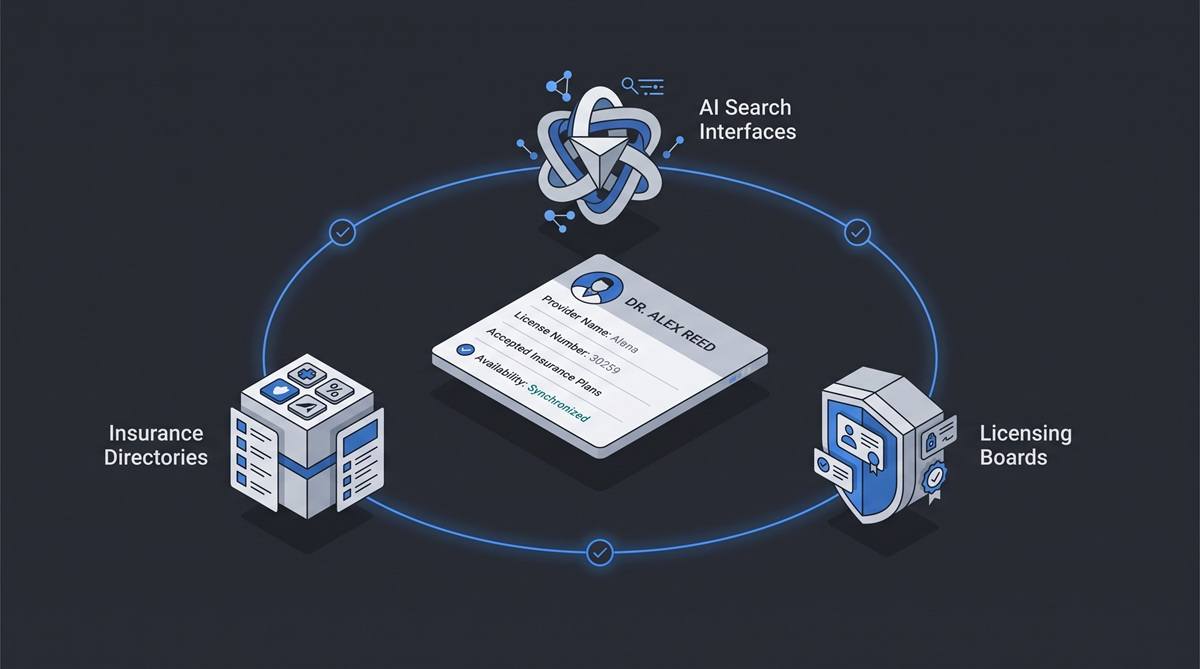
Compliance adds another layer most other industries do not face. Any patient data used to personalize marketing has to stay entirely separate from the AI tools shaping public-facing content, since protected health information cannot touch a system without the right agreements in place.
Getting visibility wrong here does not just cost a click; it erodes the trust patients place in both the AI system and the provider it named. That makes healthcare marketing one of the few categories where slower, more deliberate AI adoption is actually the safer strategic choice.
Hotel Marketing in 2026: The Booking Funnel Has a New Front Door
Travel planning has fragmented. Travelers now split their research across search engines, booking platforms, and generative AI tools for trip planning, a behavior that has roughly tripled since 2022. Fully AI-completed bookings remain rare, but AI-assisted planning is already reshaping which hotels get considered before a traveler ever reaches a booking page.
Reviews carry outsized weight in this new funnel. AI systems weigh guest ratings heavily when deciding which properties to recommend, which means reputation management has become inseparable from hotel marketing rather than a side task handled separately.
|
Reviews
AI systems weigh guest ratings heavily when deciding which properties to recommend. Reputation management is no longer a side task.
|
Google Business Profile
Where a traveler’s AI-assisted search first surfaces a property, before a booking page is ever reached.
|
Structured Data
Property details AI assistants can read directly, reducing dependence on third-party platforms for visibility.
|
This shift also changes the direct-booking calculation. A hotel that shows up well in an AI-generated recommendation, but only through a third-party booking platform, still loses margin to that platform.
Hotels that treat their Google Business Profile, review responses, and structured property data as one coordinated system are the ones showing up when a traveler asks an AI assistant where to stay, and the ones best positioned to convert that visibility into a direct reservation.
The Common Thread
Every one of these industries is living through the same underlying shift, just at a different pace. Search has split into two parallel systems: one built on links and rankings, the other built on citations and trust signals. Fashion brands need machine-readable catalogs. SaaS companies need third-party credibility. Local businesses need consistent, accurate profiles. Healthcare providers need real-time accuracy. Hotels need reputation infrastructure.
The tactics differ by industry, but the underlying requirement is the same everywhere: be structured, be accurate, and be cited somewhere other than your own website. That is exactly why treating SEO and GEO as one connected strategy, tailored to the specific data and trust signals each industry runs on, matters more now than a single generic playbook ever could.
Brands that treat AI visibility as a bolt-on will keep losing ground to those who built it into the marketing plan from the start.