

We get it, setting up an online presence for your business can get expensive, and the temptation to cut costs in some areas can be heavy. But, trust us, your website is not an area to skimp on.
You might think you’ve bagged a great deal with a cheap, attractive website, but a website is never just “set and forget.” Someone has to maintain it after launch. That could involve a time commitment from the business owner, or it could be delegated to a professional partner who treats it as a living system rather than a finished project.
Ultimately, if no one maintains the website, it can quietly start underperforming. That’s why it’s important to ensure your website has been developed with performance and efficiency in mind, and not just flashy looks.
Why Is My Website Not Bringing Any Leads?
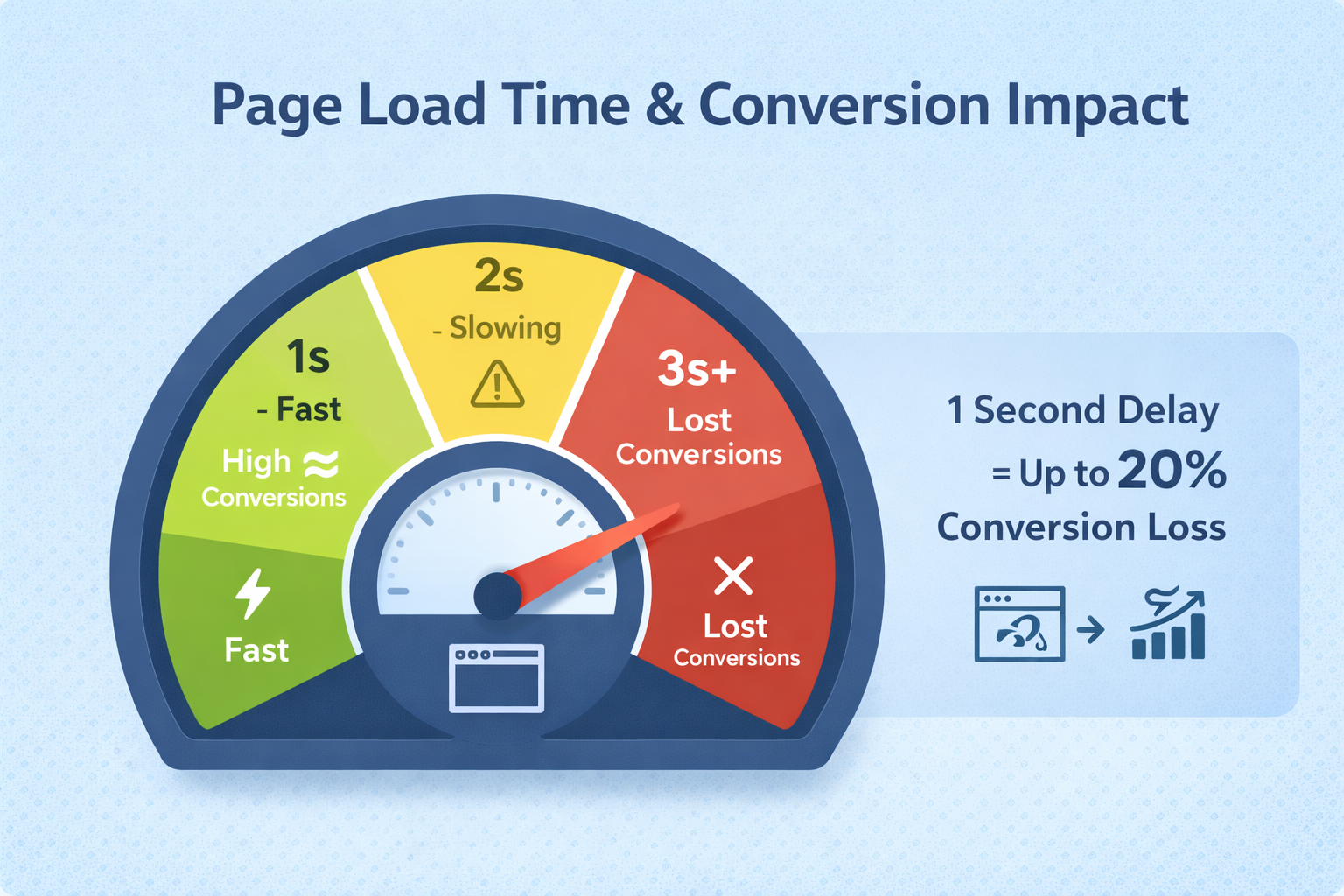
Sure, your website looks professional and attractive, but why are your inquiries rare or nonexistent? Research shows that for every 1-second load time delay, your business could lose up to 20% of conversions. Now imagine what a 7-second delay could do.
If you’re struggling for leads, the problem is most likely not your website design. It’s the lack of real engagement elements beneath the surface that actually leads to conversions. When your website is missing strategy, messaging, tracking, and lead magnets, no amount of polish can turn it into a conversion machine.
No Marketing Logic, Just Random Pages
A well-thought-out website should lead visitors to the next stage of conversion with every subsequent page. If your site doesn’t do that, then you’ve probably fallen into one of these traps:
No Clear Offer or Next Step
It’s simple; if visitors can’t quickly identify what your business does, who you serve, or why they should choose your product over your competitors, they won’t stick around for long. These identifiers are so important that 61% of consumers will move on to another site if they can’t find what they’re looking for right away. If the buttons and sections on your website don’t guide users to call, book, or request a quote, then your pages simply aren’t doing their job.
Design First, Strategy Later (or Never)
When your website is built around a design template, instead of a clear customer journey, you end up with a platform that has no funnel or conversion flow. Not only does that make it harder to convert high-potential leads, but it also complicates the process of managing or updating your website, because changes could feel messy and unstructured.
Cheap Websites Often Lack Strategy
The truth is, a proper website build starts long before any design work happens. A good site is built on a detailed marketing strategy, while cheap builds usually skip:
- Discovery sessions
- Business and audience research
- Goal setting
- Definition of success metrics
Instead, they stick to the same layout for all clients, no matter their industry or growth stage. Plus, with minimal tracking in place, it can feel like you’re left guessing what’s working and why leads aren’t coming.
Dummy Content That Soaks Up Your Time
A good website should be built with research and content specifically suited to your business’s needs. But cheap websites tend to come with content that still needs you to spend valuable time adding your own personal touch to refine. Here’s what cheap web content leads to:
Placeholder Text and Generic Copy
To move quickly, cheap websites usually launch with:
- Lorem ipsum placeholders
- Vague slogans
- Copy that could apply to almost any business
At first, this might seem harmless, but it quietly shifts the workload back onto you. Suddenly, you’re the one rewriting pages, clarifying services, and explaining your value, all without much guidance or support.
Endless Review Rounds
Because there’s no upfront messaging strategy, revisions leave you spending time on:
- Fixing wording
- Swapping images
- Correcting basic information
Time that could be spent running your business is lost trying to make an unclear website usable.
No Real Setup Behind the Scenes
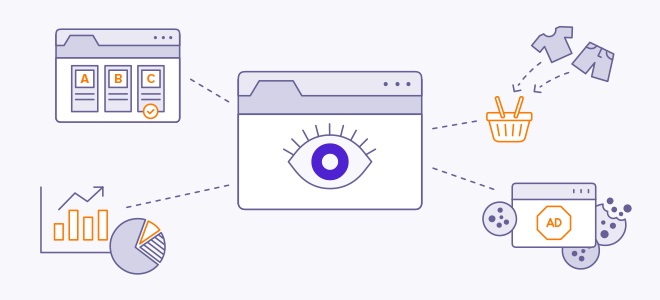
A website’s visible pages are just the tip of the iceberg. It’s the backend, covering everything from forms and email routing to analytics and tracking codes, that really ensures the site works effectively as a valuable business tool. Let’s take a look at what a poor setup leads to:
Forms and Emails That Don’t Truly Work
When using affordable websites, it can sometimes be unclear where your form submissions are headed. Often, leads get lost in spam filters or simply don’t arrive because the routing wasn’t thoroughly tested before going live.
As a result, some businesses only realize months later that their main contact form was mistakenly sending inquiries to an outdated email address or failing silently without notice.
No Tracking, So You’re Flying Blind
The best websites start off by setting up analytics properly, installing conversion tracking, and creating dashboards to keep an eye on performance. Meanwhile, cheap websites tend to overlook these key technical steps.
Without analytics, it’s hard to see how your campaigns are doing, understand your visitors better, or make smart choices based on real data. You’re putting effort into your business asset, but without the right info, it’s tough to tell if it’s truly paying off.
No Documentation, No Ownership, No Control
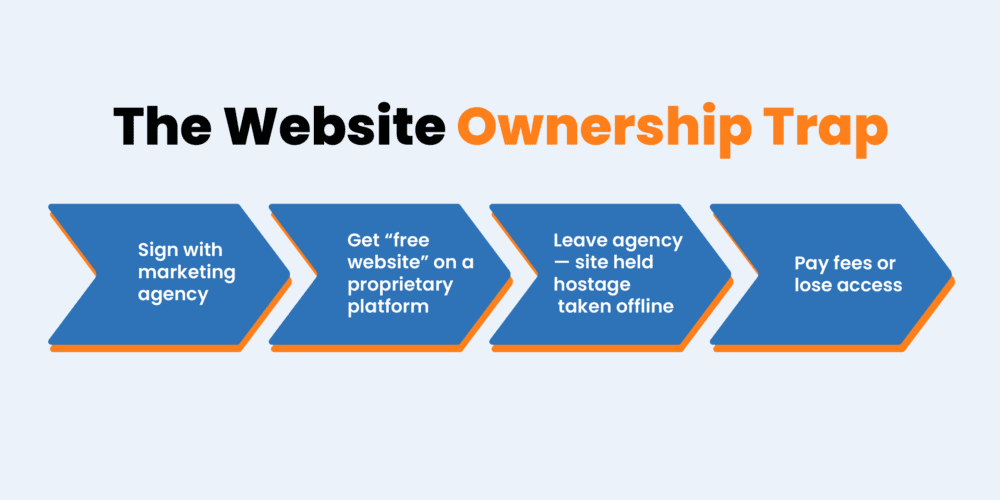
The most dangerous aspect of cheap websites is probably what happens after the designer sends the final invoice. You receive a live website, but here’s the documentation that’s missing:
- Hosting credentials
- Domain access
- CMS logins
- Form configurations
- Email routing details
- Analytics setup
Business owners often find it challenging to keep track of who owns what, where systems are interconnected, or who to reach out to when issues arise. Sometimes, the agency or freelancer you work with might become hard to contact or suddenly disappear. Access credentials and important information may only be stored in someone else’s memory or personal accounts.
When you need to update or rebuild your website, it can feel like starting fresh, needing to rediscover how everything works through trial and error. This could mean bringing in someone new to figure out what ideally should’ve been documented from the beginning. Ultimately, if your website isn’t properly documented, it’s like you don’t fully own it.
Missing Tracking & Accountability
Besides the technical setup, cheap websites often miss out on performance ownership. There’s no clear person responsible for keeping an eye on how the site performs, no KPIs are set, and decisions are made without relying on data because that data isn’t available.
When this happens, problems can sneak by unnoticed for months. Your bounce rate might be surprisingly high, forms could be malfunctioning, or whole sections might not work properly on mobile devices. And you might not realize until someone points it out or you happen to come across it yourself.
Problems That Show Up Months Later
The real cost of cheap websites becomes clear over time, rather than right at the start. When you don’t follow a strategic approach, these issues could end up hurting both your ability to generate leads and your finances.
Lost Opportunities You Never Notice
The most heartbreaking part is often unseen: leads that never come your way, customers opting for competitors because your site didn’t feel trustworthy enough, and revenue that just didn’t happen. In fact, 88% of online consumers are unlikely to come back after a negative experience. You keep paying for hosting and small updates, yet the core issue of your site not turning visitors into customers still needs attention.
Technical Debt You Pay Twice For
Cheap builds are liable to come with these technical issues:
- Slow load speeds
- Plugin conflicts
- Security vulnerabilities
- Messy site structure
When you finally hire a professional web design and development agency to fix these issues, they could suggest starting fresh because fixing the problems could end up costing more than building a whole new site. This means you’re paying twice: once for the cheap site, and again for the professional replacement.
Just like a commercial building requires ongoing maintenance, such as HVAC servicing, plumbing repairs, structural inspections, and regular updates to meet code, your website needs the same level of care. Security updates, performance optimizations, content refreshes, and functionality improvements are all essential. Without a proper maintenance plan, small issues can quickly turn into costly rebuilds.
You Often Pay Twice
This pattern repeats across industries and business types:
- You pay for a cheap website
- You discover it doesn’t convert
- You attempt to fix the issues
- You finally hire a second agency to build it properly
After all that, you realize the total cost far exceeds what you would have invested initially. This double payment represents not just money, but also time. The months or years you operated with an underperforming site represent lost revenue opportunities that can never be recovered.
DIY Builders Can Mislead You
Website builders often highlight just how simple it is to create your own site. With drag-and-drop features that feel intuitive, launching your site becomes quick, giving you a real sense of achievement when you “finish”. But behind the scenes, three key elements are missing:
- Strategy
- Funnel
- Conversion logic
Without a strategy, your website won’t drive the results you need. It may just be a digital brochure that isn’t really helping your business grow results.
What a “Good Enough” Website Should Actually Include
A professional website doesn’t need to be perfect on day one, but it should be built on a solid foundation that supports growth. Let’s walk through what a good website needs.
Just had an eye-opening convo with a startup founder.
They said, “We don’t need a product demo video on our landing page. People have short attention spans. Nobody watches those.”
I smiled and thought, “Ah, the classic website mistake.”
Here’s the thing: Your website isn’t for…
— Namya @ Supafast (@namyakhann) October 8, 2024
Built Around Your Business
Your site should be designed to serve your specific business model. It needs to have:
- Elements that focus on your main services
- Clear messaging that resonates with your target audience
- Social proof, like testimonials, case studies, and client logos, to build credibility
- Obvious contact paths at every stage of the user journey
Proper Setup So Leads Don’t Go Missing
Your infrastructure should ensure that leads actually reach you and can be tracked back to their source. That means:
- Forms are tested before launch
- Email routing is verified
- Spam protection prevents junk submissions
- Analytics are installed and configured correctly
What a Good Website Build Should Include
Professional web design and development services include several essential elements that inexpensive solutions often overlook:
- Clear conversion goals define what success looks like and ensure every design decision supports those objectives.
- Tracking ownership means someone is responsible for monitoring performance and identifying issues before they cost significant money.
- Business-aligned content speaks directly to your target audience using their language and addressing their specific needs.
- User-focused structure makes navigation intuitive and guides visitors naturally toward conversion points.
Design tip for founders:
Your homepage headline has 3 seconds to answer:
1. What do you do?
2. Who is it for?
3. Why should I care?If it takes longer to understand, you’ve lost them.
Clarity > Cleverness.
Are you follwing this these above tips?— Imrul Kayes (@ikayesdesigner) February 7, 2026
- Mobile-first design ensures excellent experiences across all devices, crucial since mobile traffic often exceeds desktop.
- Fast load speed keeps visitors engaged. Research shows that a B2B site that loads in one second converts 3 times higher than one that takes five seconds.
- SEO fundamentals are built into the site architecture, giving you a competitive advantage in search rankings from day one.
- Security and backups protect your business from data loss and cyber threats.
- Easy content management allows you to make updates without technical expertise or ongoing developer dependency.
Choosing a Digital Marketing Partner
The right digital marketing agency can transform your website from a cost center into a revenue asset. However, choosing the right agency partner needs careful consideration. Here’s what you need to know before making that commitment:
Questions to Ask Before You Commit
Get answers to these questions before deciding if a marketing agency is right for you:
- How does this connect to revenue? Find out the agency’s conversion paths, lead generation strategies, and how the site supports your sales process.
- What setup is included? Understand exactly what technical infrastructure comes with the build (analytics, form testing, email verification, tracking codes, and more).
- What happens after launch? Clarify the ongoing relationship. Who monitors performance? How are updates handled? What’s included in maintenance?
What a Long-Term Partner Should Do
The best agency relationships go beyond the initial website launch. It’s important to ensure they cover these bases for a healthy, lasting brand experience. Your partner should:
- Understand your industry deeply
- Recommend only what you actually need, rather than upselling unnecessary features
- Handle both strategy and execution
Final Thoughts
A cheap website might seem like a good deal at first, but it can end up costing you a lot more in the long run. Missed opportunities, damage to your credibility, wasted marketing dollars, and costly rebuilds can all add up to expenses far beyond what you initially saved by opting for the cheaper choice.
A properly built website, meanwhile, becomes a revenue asset. It converts visitors into customers, supports your marketing efforts, grows along with your business, and keeps providing value for many years to come.
So, the question isn’t whether you can afford professional web development. It’s whether you can afford the accumulated costs of a cheap alternative that quietly undermines your business daily.
