

Every marketing lead finds it frustrating to see competitors win customers each month through higher search rankings, social media dominance, and better website conversions. Oftentimes, this gap comes down to investing in the right digital marketing packages that match their goals and provide measurable results.
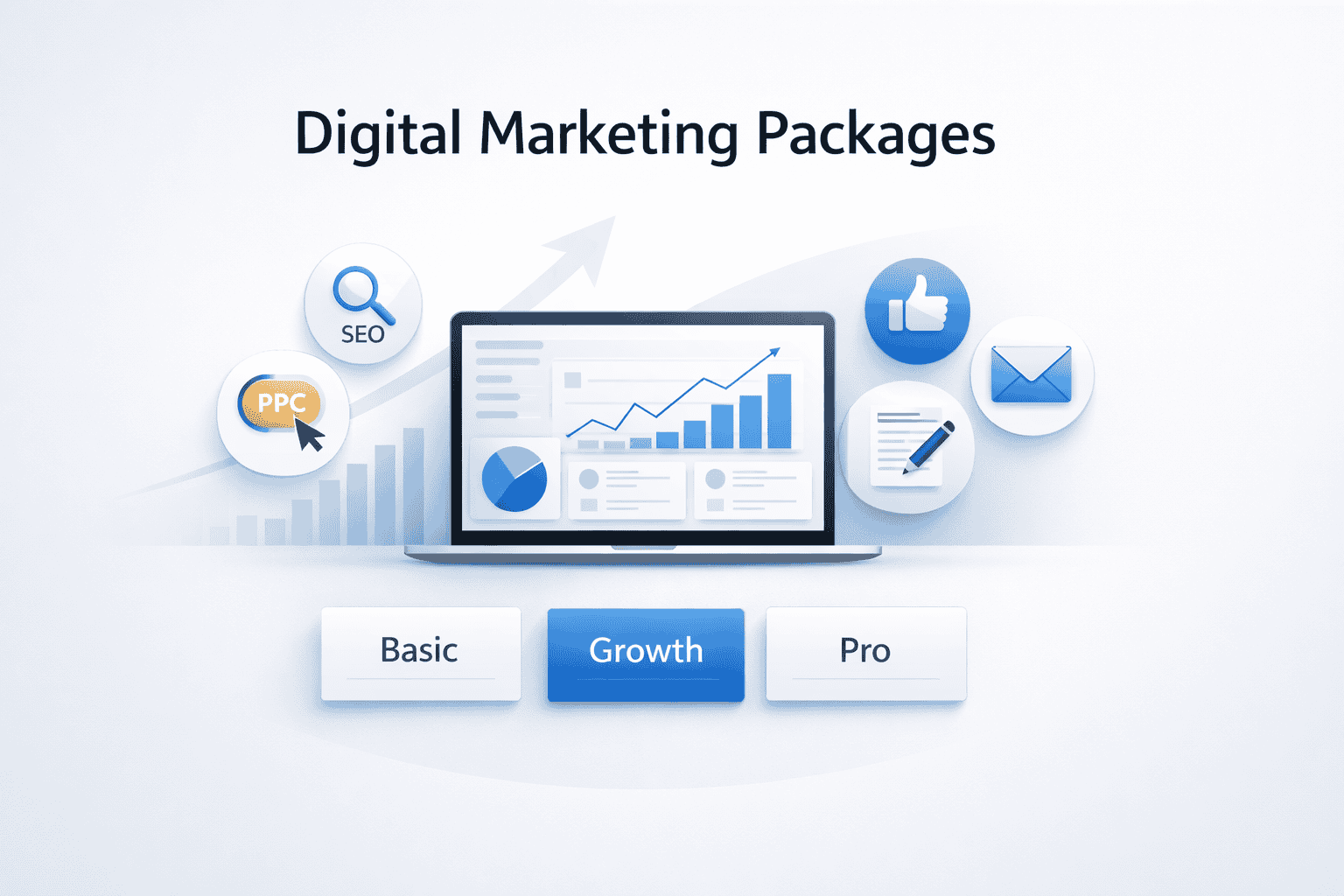
Choosing the right package can change everything from your visibility in search engines to ROI on advertising spend. You need to understand what digital marketing services include, how pricing works, and most importantly, how to choose the package that turns your marketing investment from a cost into a growth engine.
What Are Digital Marketing Packages?
A digital marketing package is basically a pre-bundled set of marketing services that are sold together under a single price. These online marketing packages usually include a set range of services, deliverables, reporting and analytics, and dedicated account management to help meet your objectives.
There are two main approaches to structuring packages:
- By service focus: This includes SEO packages, PPC packages, and social media packages.
- By business level: Packages can be organized based on the size of your company.
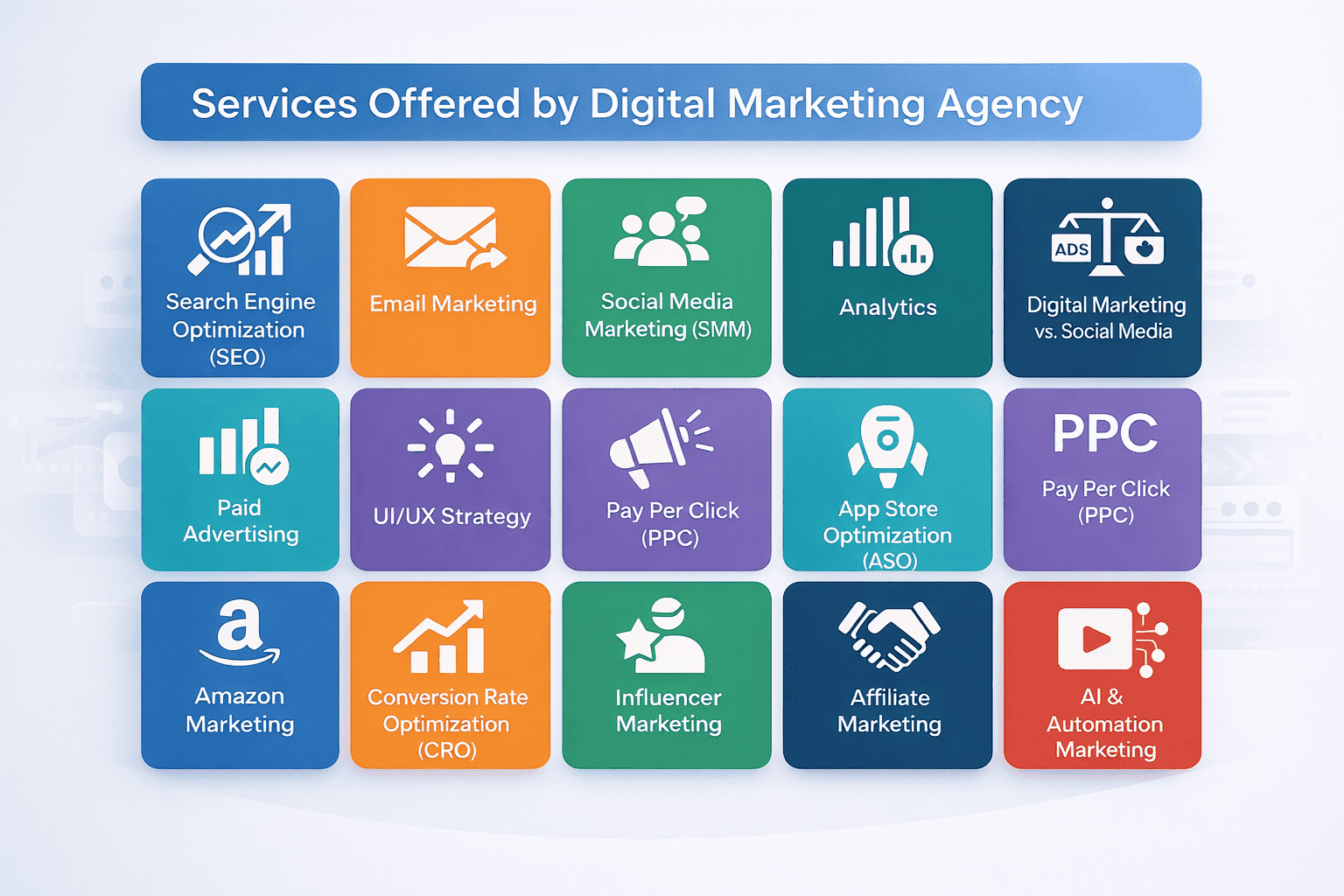
Understanding both structures will help you identify which package structure matches your current situation and future ambitions. Plus, with 45% of businesses increasing their digital marketing budget, now might be your best chance to tap into the projected $1.17 trillion digital advertising market.
Digital Marketing Packages by Service Type
These service-focused packages group related marketing strategies by channel, allowing for specialized expertise and better results.
SEO Packages
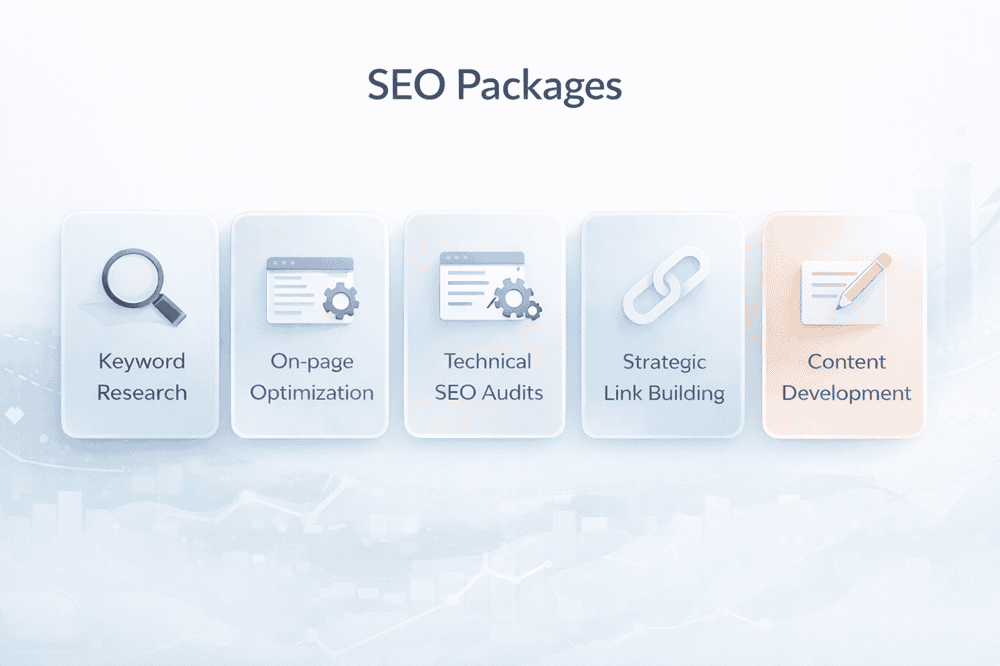
SEO services mainly focus on improving your organic visibility in search results by optimizing your website and content. A standard SEO package includes:
- Keyword research
- On-page optimization
- Technical SEO audits
- Strategic link building
Given that around a quarter of consumers start their purchasing journey on search engines, making SEO packages a foundational element of the marketing stack could take your business to the next level.
GEO Packages
Generative Engine Optimization (GEO) is the latest advancement in digital visibility, focusing on techniques that optimize content for AI-powered search engines and generative platforms. The need for GEO is growing rapidly, and most consumers already rely on AI results for at least 40% of their searches.
As AI results like ChatGPT and Google SGE responses increasingly determine how people discover information, GEO packages help your brand appear in AI-generated responses and recommendations.
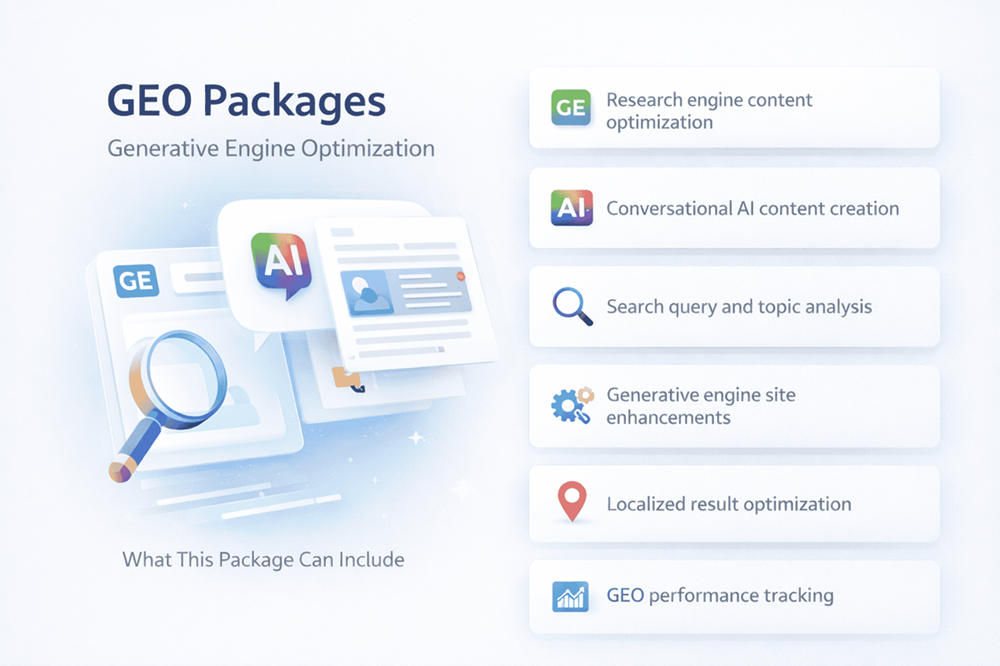
These services focus on organizing content for machine readability through schema markup and well-defined information hierarchies. They aim to provide fact-based answers that AI models can confidently reference, while maintaining a tone that is both conversational and authoritative.
PPC Advertising Packages
Pay-per-click advertising packages manage paid campaigns across Google Ads, Bing Ads, and social media platforms, delivering immediate visibility while more organic strategies gain momentum. These digital advertising services include:
- Campaign strategy development
- Keyword research and competitive bidding analysis
- Ad copywriting and creative design
- Landing page optimization
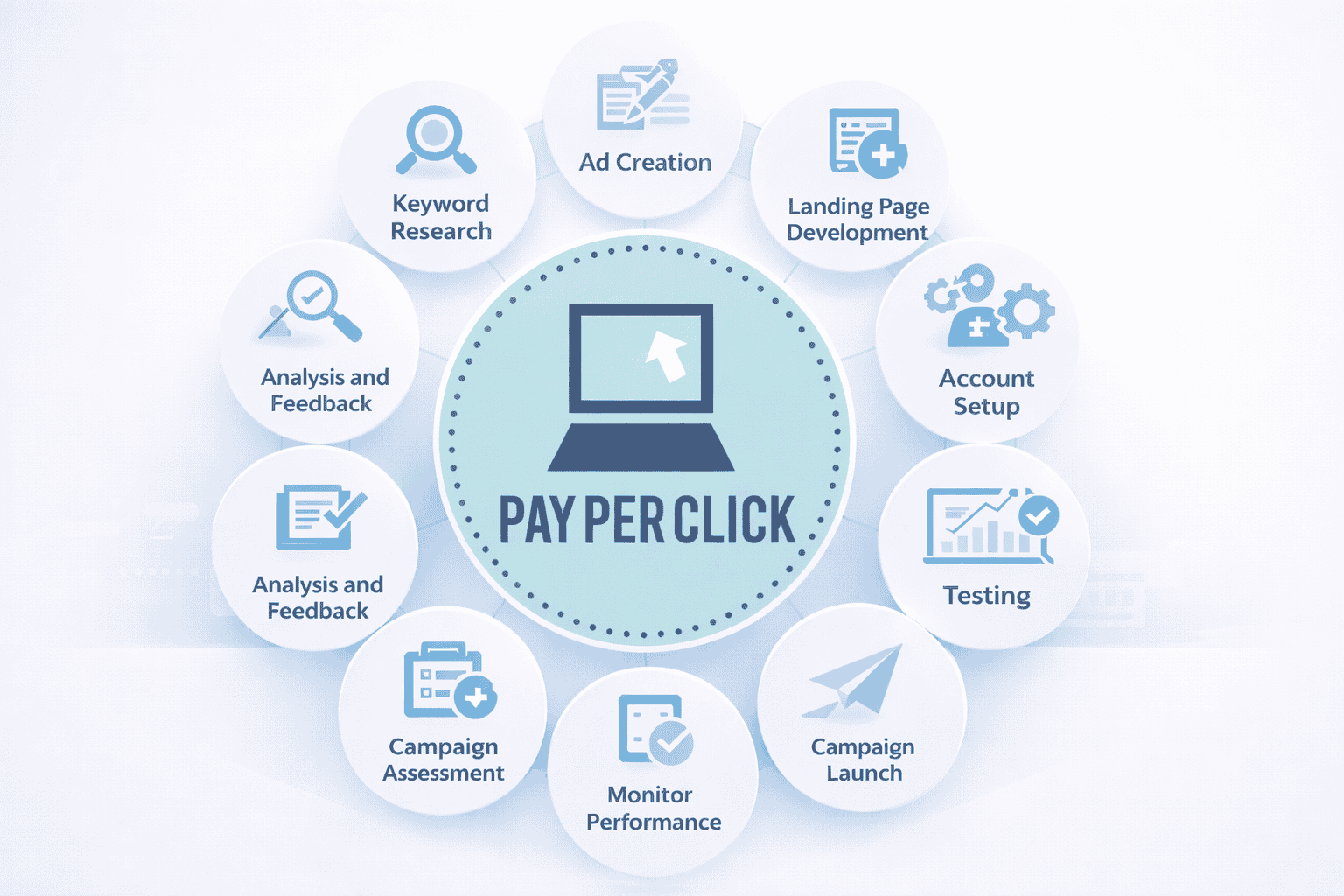
The advantage of PPC is its measurability. You can track exactly which ads generate clicks, leads, and sales, creating an opportunity for data-driven optimization that improves content performance over time.
Social Media Marketing Packages
Social media marketing service packages manage your presence across platforms like Facebook, Instagram, LinkedIn, Twitter, and TikTok. They build communities and trust around your brand while driving engagement and conversions.
This type of marketing is essential today, as over 57% of consumers research brands and products on social media before deciding whether or not to buy. These marketing services could cover:
- Profile optimization and branding consistency
- Content calendar planning and creation
- Community management and response monitoring
- Paid social advertising campaigns
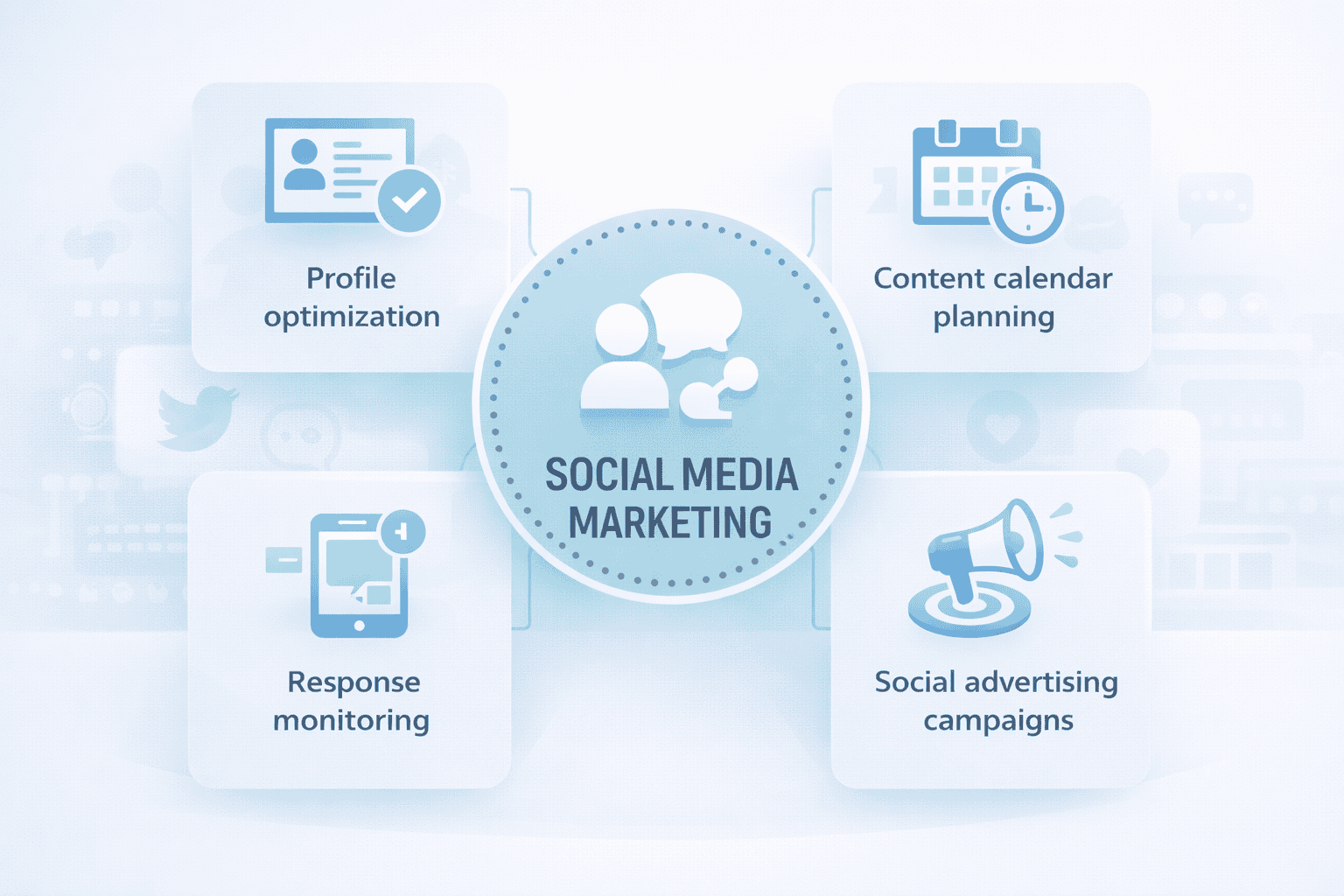
The most successful social media packages combine organic community development with targeted paid advertising to increase your reach and speed up results.
Content Marketing Packages
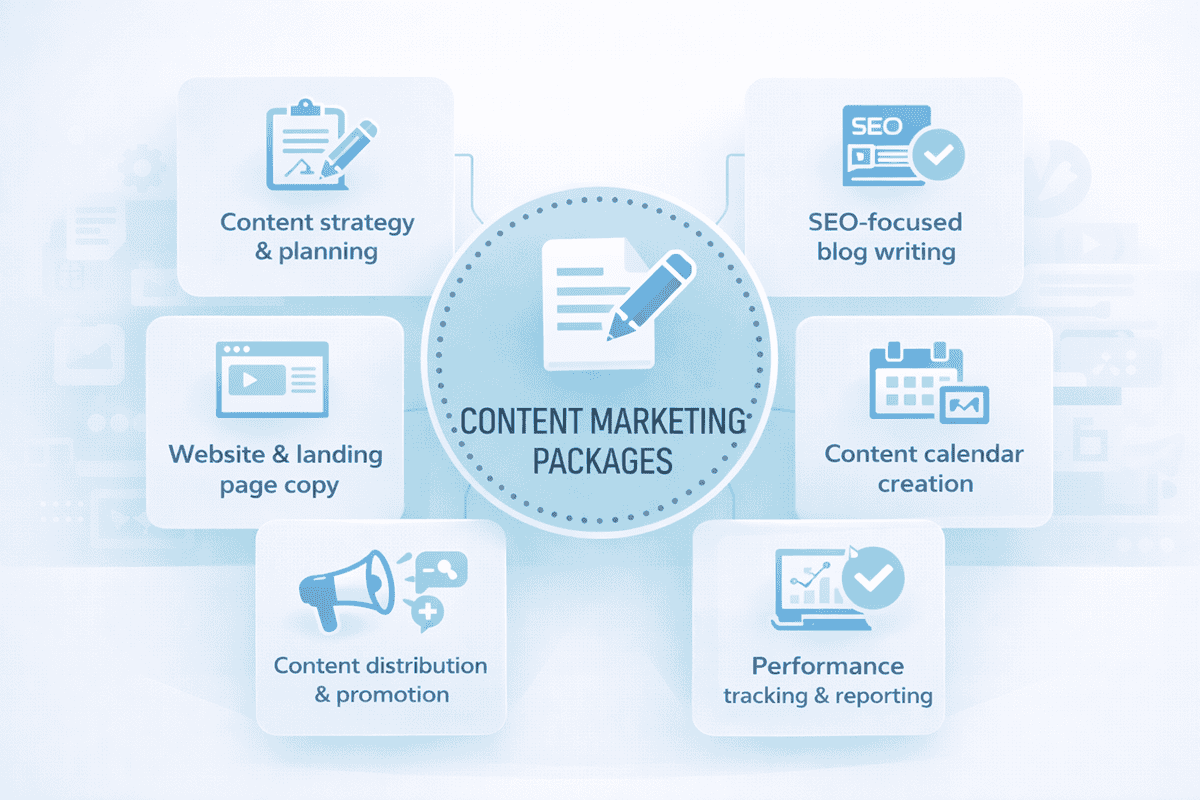
Content marketing packages create content that engages and converts your target audience across multiple channels. These versatile packages come with:
- Blog articles tuned for SEO and reader engagement
- Website copywriting communicating your value proposition
- Email newsletter development for lead nurturing
- Video script writing and production coordination
- Infographic design for visual information sharing
Ultimately, quality content serves multiple purposes: providing instant value to consumers and building long-term SEO that sustains organic traffic after publication. The best packages combine content creation with keyword strategy to meet both audience needs and business goals.
Web Design & Branding Packages
Your website acts as the central hub where all marketing channels direct traffic, making its design and functionality critical for the overall success of the campaign. In fact, up to 75% of consumers judge the credibility of a business based on its web design alone.
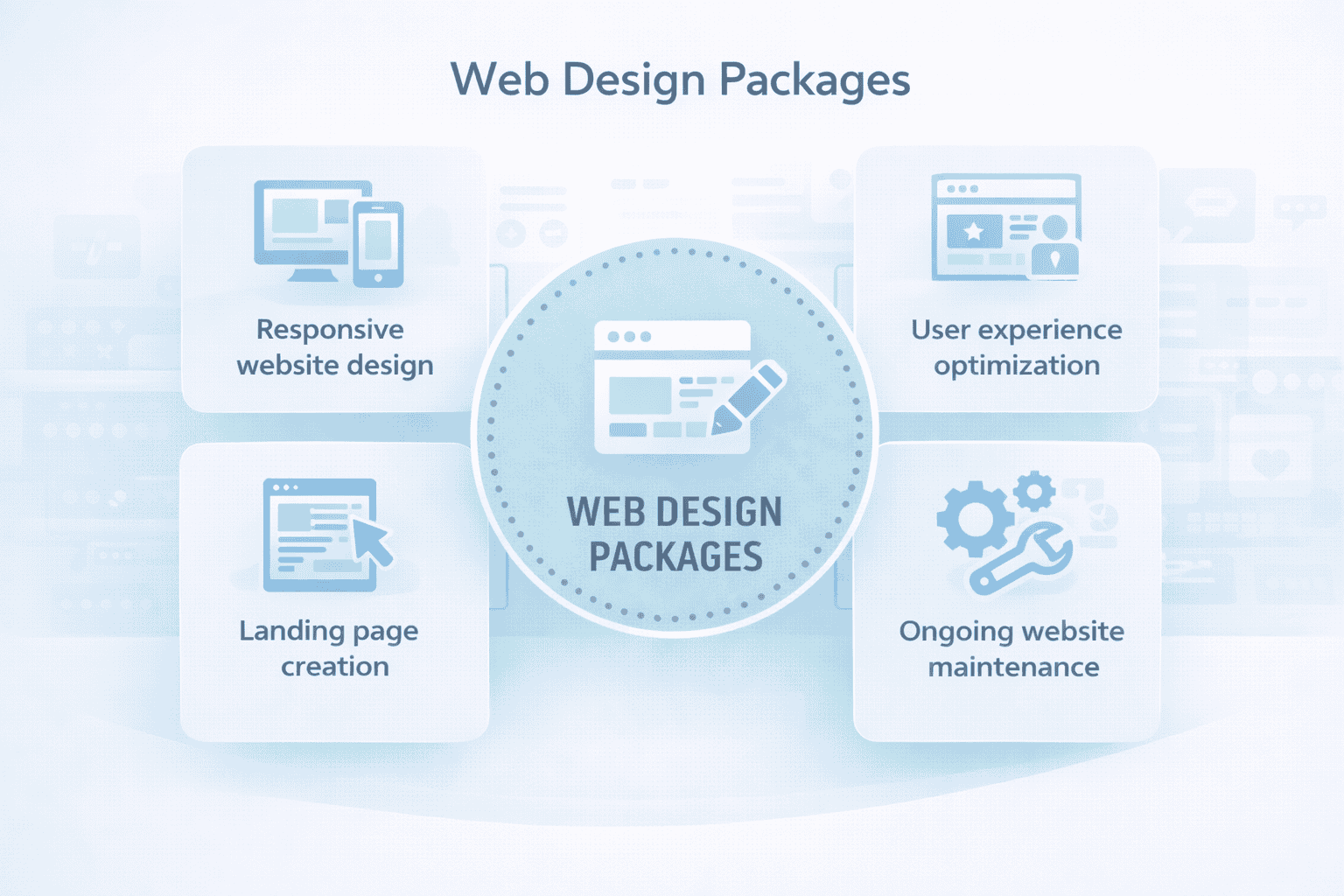
Web design and branding packages ensure your digital foundation effectively converts the traffic that your marketing generates. These services cover:
- Responsive website design
- User experience optimization
- Landing page creation
- Ongoing website maintenance
Full-Service Digital Marketing Packages
Comprehensive packages combine SEO, PPC, content, social media, email marketing, and analytics into unified strategies where each element supports the others. These all-in-one digital marketing packages are ideal if you want one partner to manage all your marketing activities instead of juggling multiple vendors with conflicting strategies.
Full-service packages ensure consistent messaging across channels, creating a unified customer journey and consolidated reports showing channel integration. Though costly, they usually produce higher ROI than fragmented strategies.
Digital Marketing Packages by Business Level
Business-level services create tiered packages from basic starter plans for new businesses to advanced packages for enterprise-size brands with complex needs.
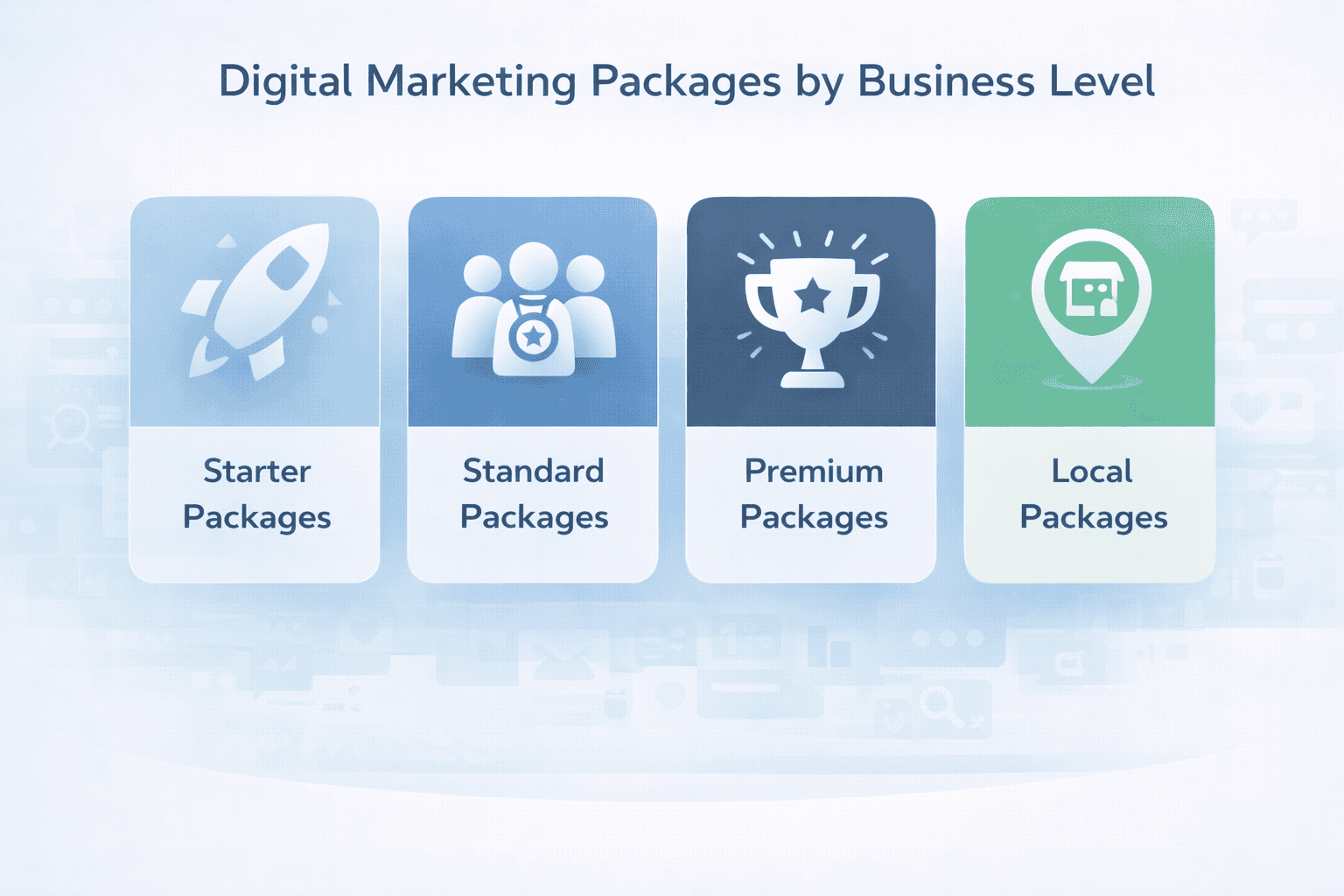
Basic or Starter Packages
Entry-level packages target startups and small businesses with limited budgets, offering essential services like basic SEO, social media setup, and content creation to boost online visibility. These businesses typically allocate $1,000 to $5,000 monthly for digital marketing service packages, focusing on high-impact activities that generate early wins and momentum.
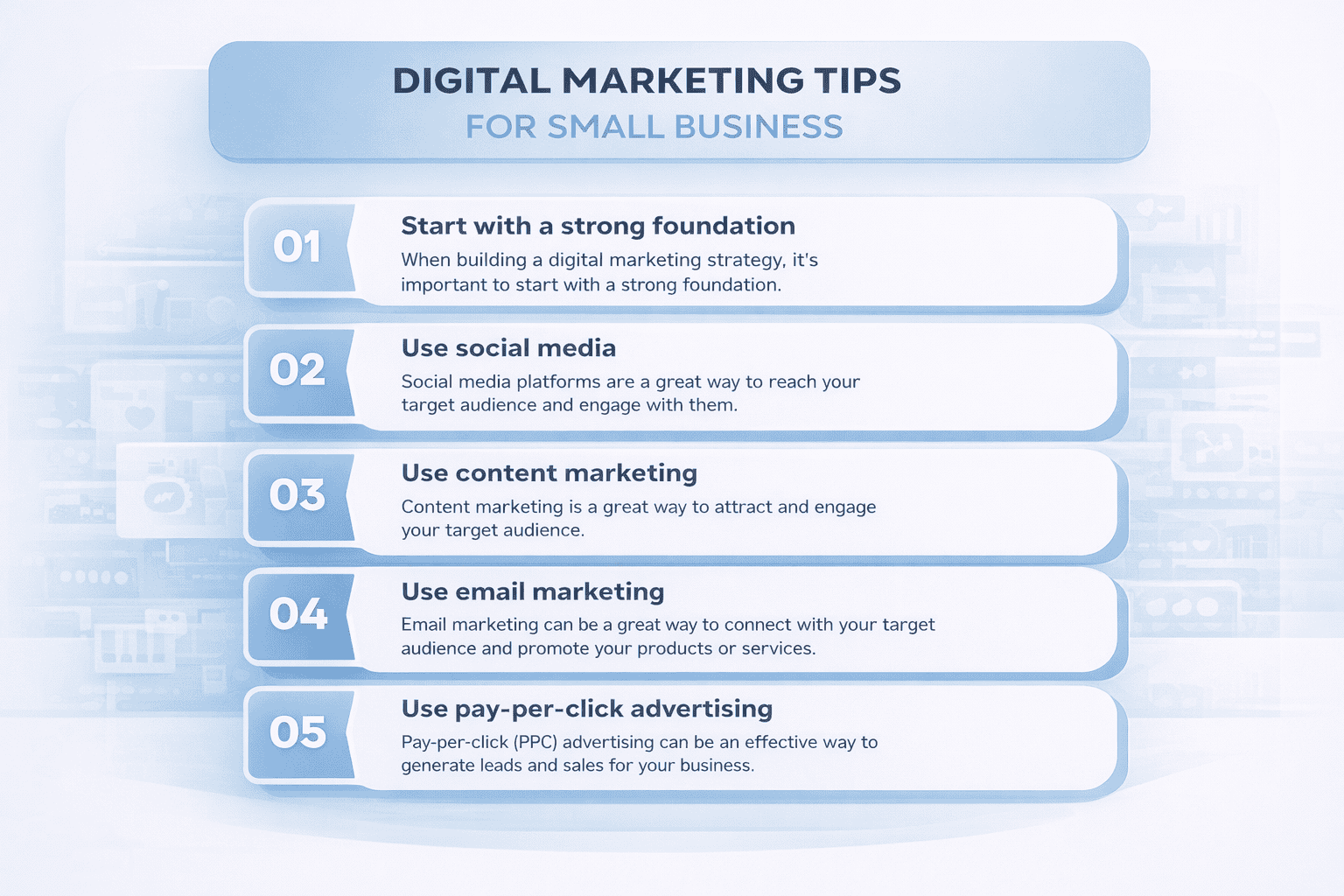
The goal of digital marketing packages for small businesses is to establish your digital foundation. That means making your website technically sound, claiming your online business listings, and starting to produce content that will gradually improve your search visibility.
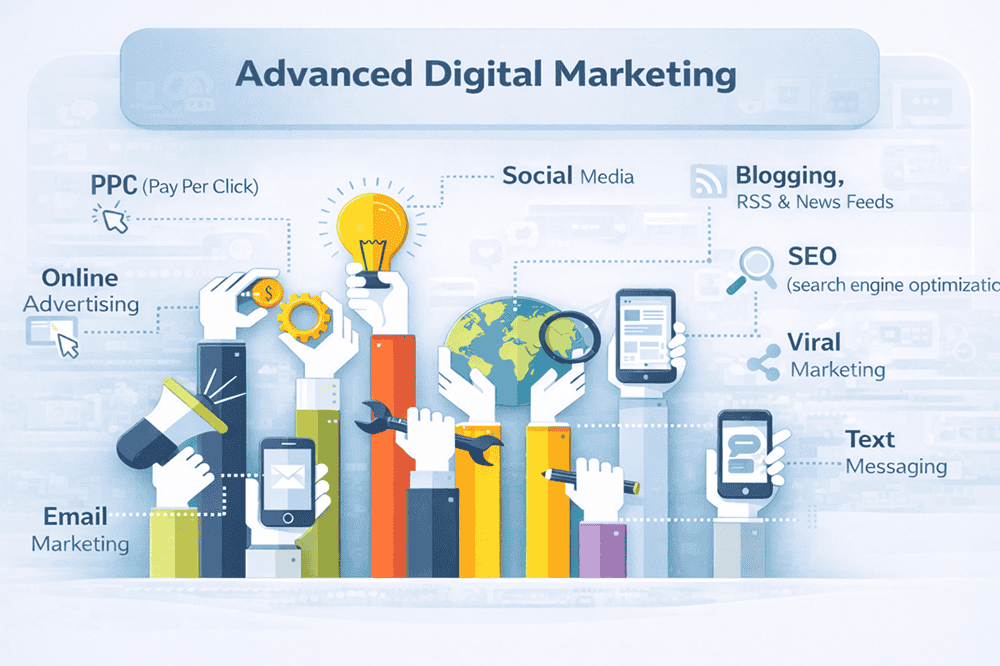
Standard or Growth Packages
Mid-tier packages serve established businesses ready to scale their marketing efforts beyond basics with affordable SEO services. These packages could include advanced SEO with constant optimization, active PPC campaigns across multiple platforms, regular content production, and social media management with both organic and paid elements.
Such online marketing packages provide enough resources across channels to generate meaningful results while remaining affordable for businesses that budget between $5,000 and $10,000 for digital marketing. They’re designed for companies that have a proven business model and are ready to invest more in customer acquisition.
Premium or Enterprise Packages
Enterprise-level packages provide multi-channel campaigns with advanced features such as marketing automation, conversion optimization, attribution modeling, dedicated creative teams, and strategic consultation. Top digital marketing firms offer premium packages over $10,000, where senior strategists handle campaigns, deliver custom analytics, and manage multiple channels.
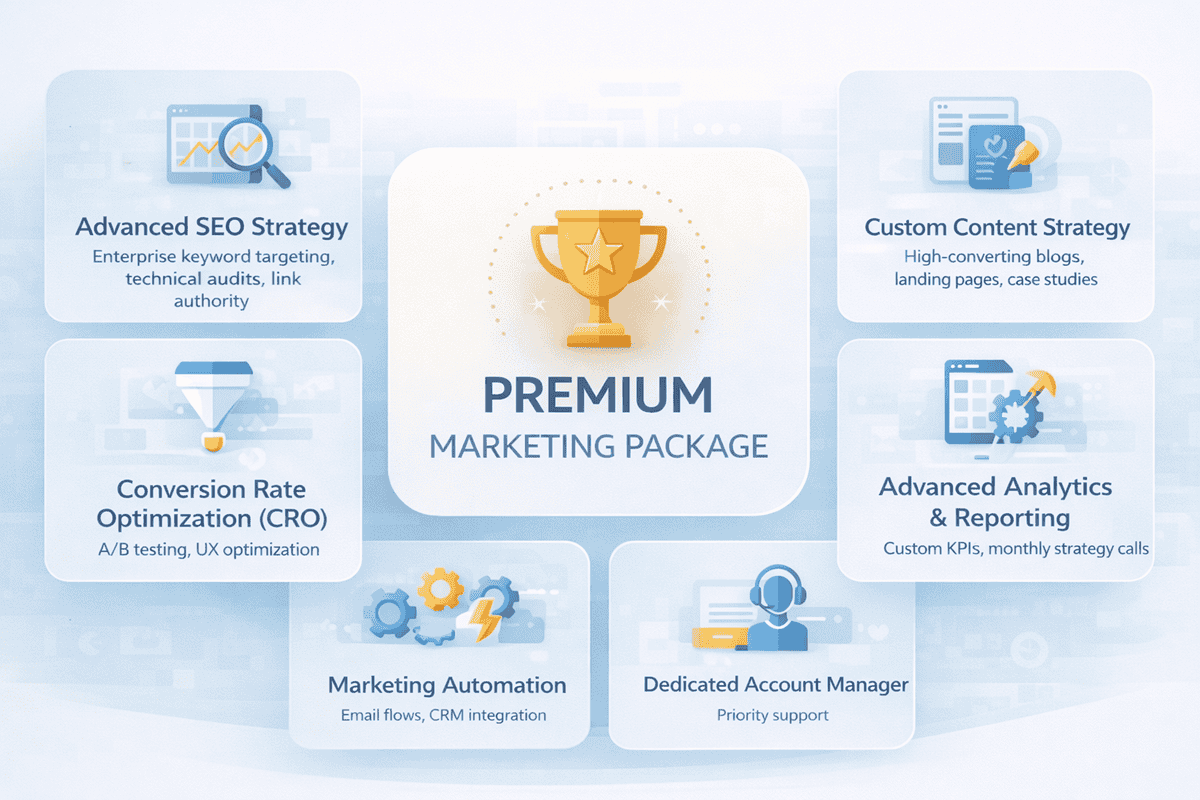
Premium packages are ideal for established brands with a substantial digital marketing budget allocation, aiming to dominate competitive markets, or for national and international brands maintaining their market leadership.
Industry-Specific or Local Packages
Specialized packages customize strategies for particular business types or geographic targeting. Local digital marketing plans, for example, focus on optimizing Google Business Profiles, location-based advertising, and community engagement that increases foot traffic to physical locations.
Meanwhile, industry-specific packages bring specialized expertise that deliver better results than generic packages do, as they target the unique challenges and opportunities of your particular market.
What’s Typically Included in Digital Marketing Packages
Even though specific inclusions vary significantly by agency and package level, most comprehensive digital marketing packages still share certain core components. Let’s highlight those key inclusions:
- Keyword and competitor research
- Campaign setup (ads, email, and social media scheduling tools)
- Content creation and optimization (especially blogs and landing pages)
- Technical and local SEO audits
- Monthly reporting and dashboards with KPIs
- Dedicated account management and strategic consultations
It’s important to remember that every agency has its own unique offerings. Some may include unlimited revisions and rapid-response support, while others specify exact deliverable quantities. Always review precisely what’s included before committing to ensure the package matches your expectations and needs.
How to Choose the Right Digital Marketing Package for Your Business
With so many digital marketing features and agency price points at your disposal, selecting the right package that has everything your business needs could be tricky. Luckily, we’ve come up with a step-by-step process that will ensure you cover every base before making a final choice.
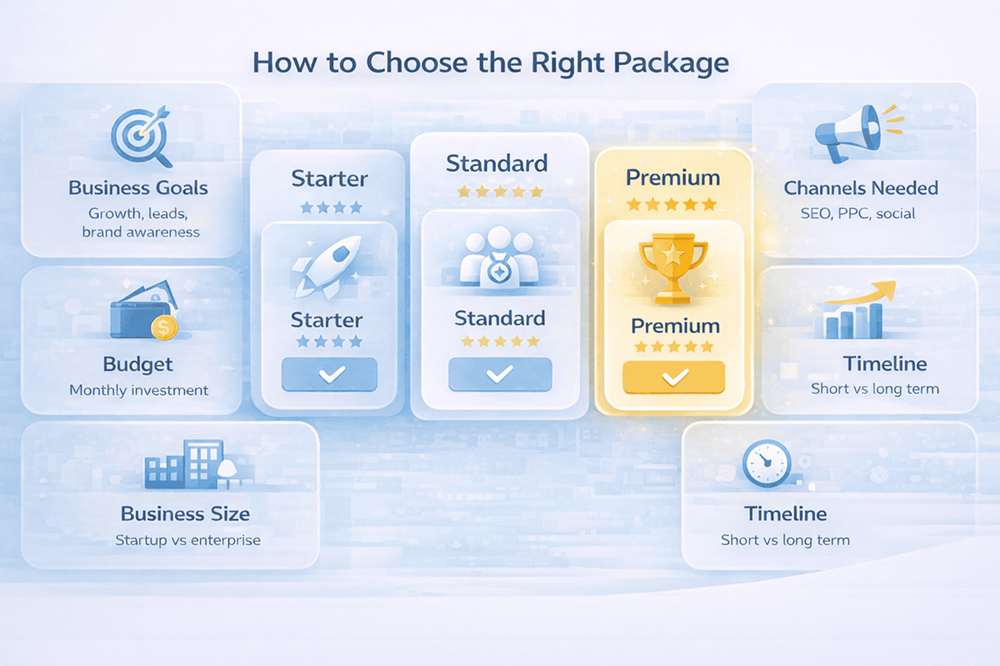
1. Define Your Goals and Budget
Start by clarifying what success looks like for your business. Are you primarily looking for increased website traffic or better customer retention? Your objectives will determine which services deserve priority and how you should measure ROI.
Meanwhile, establish realistic budget parameters based on your revenue and growth targets. The average business allocates about 7.7% of revenue to marketing, though this varies by industry and growth stage. It’s also a good idea to use digital marketing budget planner tools to help distribute your budget strategically across channels based on expected returns and your unique business model.
2. Evaluate What Services You Actually Need
Different businesses require different service combinations based on their business model and target audience. Local businesses like restaurants should prioritize local SEO and geographically targeted advertising. Meanwhile, eCommerce brands should focus on PPC advertising for immediate sales and product feed optimization for shopping platforms.
B2B companies usually benefit most from content marketing that establishes thought leadership, LinkedIn advertising targeting decision-makers, and email nurturing that guides prospects through longer sales cycles. Understanding where your customers find solutions shows you the channels and services that will deliver the highest ROI.
3. Check Agency Expertise and Transparency
Run a check on your potential agency partners based on their expertise in the industry or with businesses at your scale. Also, request case studies showing results they’ve achieved for similar companies, examine client reviews focusing on communication quality and results delivery, and verify their team has relevant marketing certifications.
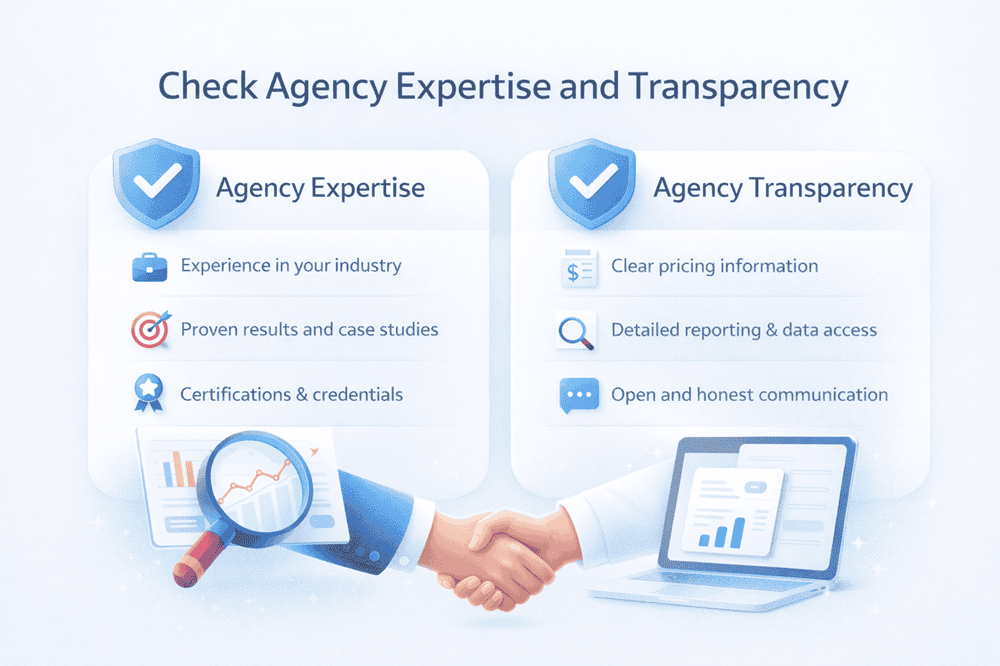
Remember, transparency separates trustworthy agencies from those making unrealistic promises. So, if an agency hesitates to explain their approach or provide client references, consider that as a warning sign.
4. Compare Package Pricing Models
Digital marketing pricing plans typically follow three primary structures.
- Monthly retainers: This offers ongoing services for consistent fees, ideal for businesses needing sustained marketing. Costs range from $2,000 to over $10,000 for small businesses and law firms.
- Project-based pricing: This is a flat one-time fee for a specific job, and it’s best for projects with a clear beginning and ending. Flat rates can range from $1,000 to $7,000 per project.
- Hourly billing: This suits small, irregular projects but can become unpredictable for ongoing work. Prices depend on the agency you hire.
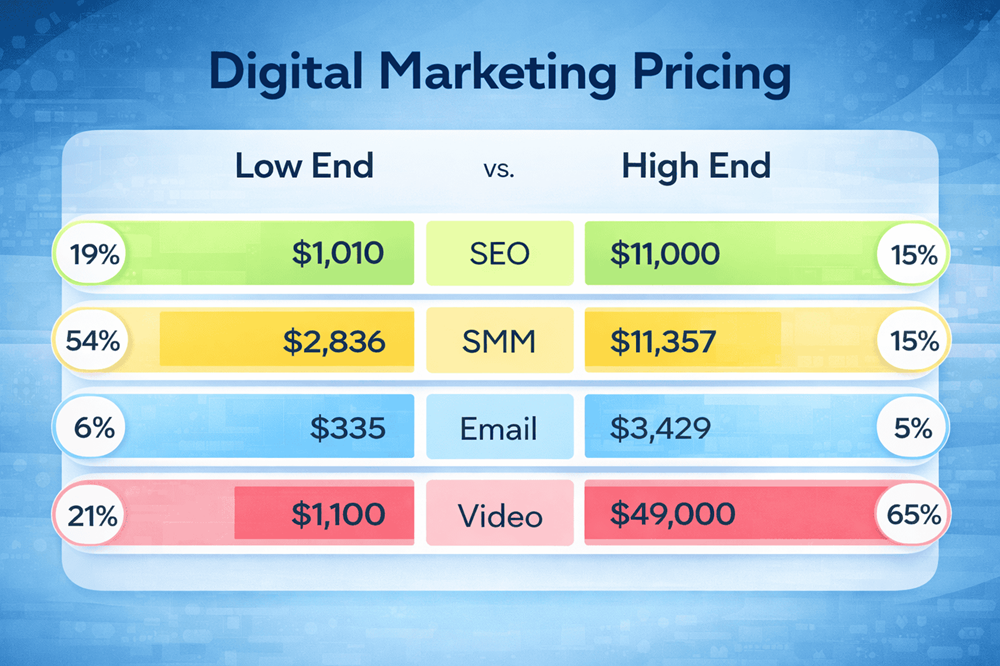
When comparing pricing, focus on ROI potential rather than choosing the lowest price. High-end SEO and PPC packages that generate substantial traffic and leads deliver far better value than a cheaper option, producing minimal results.
5. Ask About Customization Options
The best packages adapt to your needs rather than forcing you into predetermined setups. The right agency will customize its service combinations based on your priorities, business growth, market conditions, and performance data rather than rigidly following initial plans.
Your needs being six months into a partnership, might be different from initial requirements, as you learn what generates results in your market. So, find an agency that adapts its packages and shows they prioritize your success over simply selling standard offerings.
Mistakes to Avoid When Selecting a Digital Marketing Package
I’ve burned millions of dollars on stupid marketing decisions.
Not exaggerating.
And the worst part? Most of it was avoidable.
Here’s every mistake that cost me millions (so you don’t have to learn the hard way):
1. Paying influencers based on follower count instead of…
— Kosta Hantzis (@kostahantzis) November 6, 2025
Choosing a digital marketing package can be tricky, and many businesses have made mistakes that cost them valuable time and resources. So we’ve compiled a list of the main errors businesses make and how to avoid them.
- Choosing purely by price: The cheapest package rarely delivers the best value. A package that costs twice as much but generates three times the results represents far better value.
- Ignoring contract terms and deliverables: Many businesses sign agreements without fully understanding what’s included. Review contracts carefully for deliverables, cancellation terms, notice requirements, and ownership of assets like content and creative materials.
- Overlooking analytics or ROI tracking: Without measurement, you cannot determine whether your investment generates returns or simply drains resources. If an agency can’t provide transparent performance data, you’re essentially operating blind.
- Failing to align services with business goals: Don’t fall for impressive-sounding services that don’t move your business forward. Instead, regularly reference your core business objectives when evaluating whether package components deserve investment.
Example: How a Digital Marketing Package Helps a Growing Business
A regional apparel retailer with modest traffic and inconsistent sales chose a growth package that bundles local SEO, weekly blog content, and a targeted PPC remarketing campaign. Their results?
- Months 1–3: Technical fixes and local landing pages improved map visibility, meaning content started ranking for niche product keywords.
- Months 4–6: PPC remarketing captured abandoned visitors while email nurture converted repeat buyers.
- Outcome at six months: Organic traffic went up 80%, PPC ROI improved as conversion tracking matured, and overall conversion rate increased due to landing page optimization.
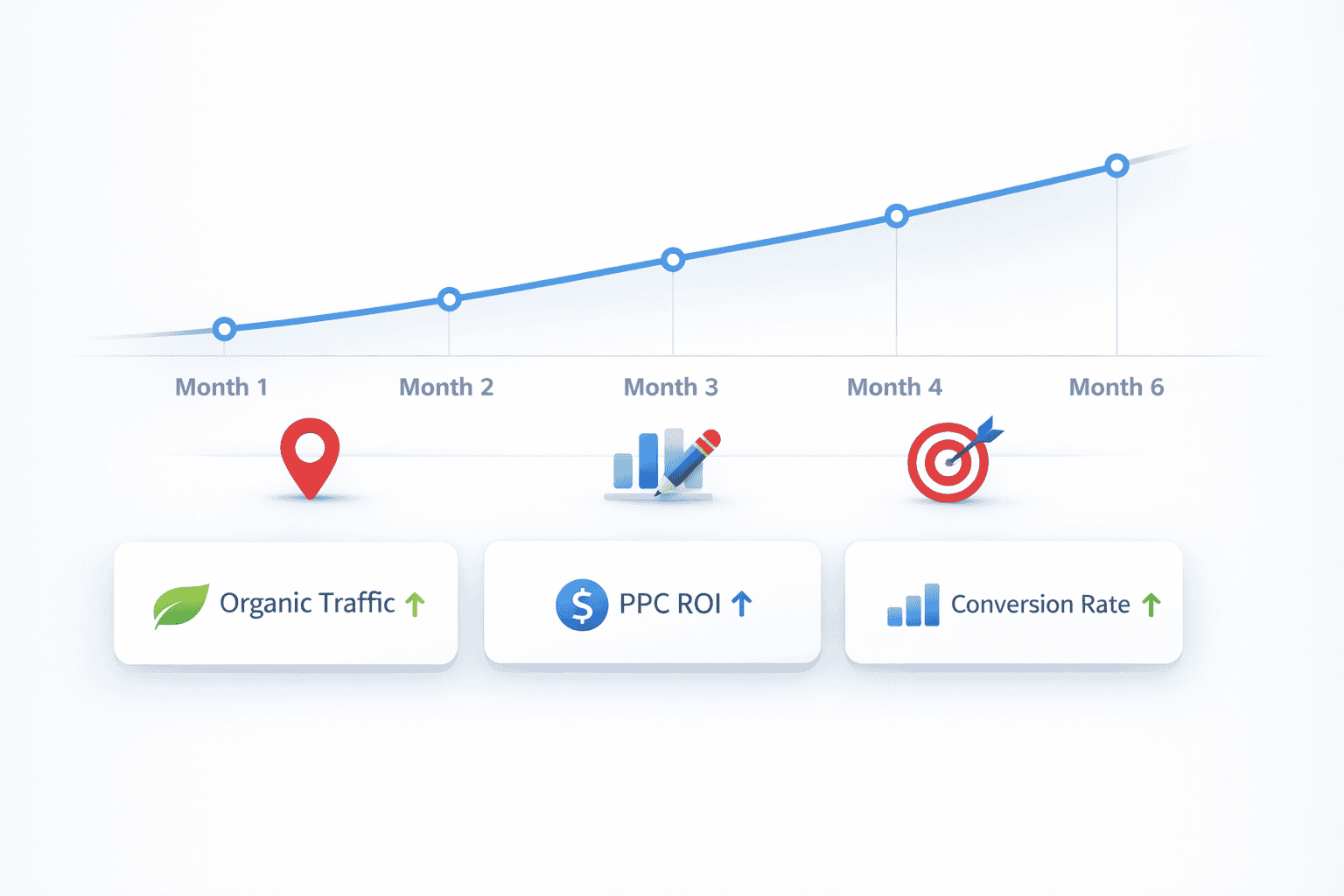
The strategy delivered better results than any single channel, showing why comprehensive marketing bundles outperform fragmented methods.
Final Thoughts
Selecting the right digital marketing service packages represents one of the most consequential decisions for your business growth trajectory.
However, by defining clear objectives, evaluating what services you actually need, and selecting partners based on expertise and transparency rather than price alone, you position your business for sustained marketing growth. If you’re unsure where to start, prioritize foundational items like technical SEO, conversion-focused landing pages, and a basic paid campaign.
For the best outcomes, connect with experienced digital marketing professionals who can assess your current situation, identify your highest-value opportunities, and design a customized strategy that delivers measurable results.
